
Adapting 'tap the testicle' to the women's game
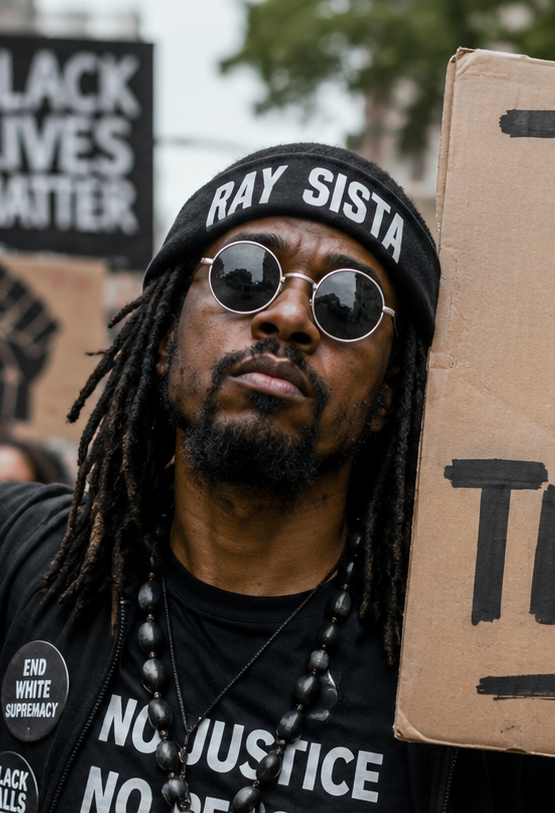
In a previous article I argued how 'tap the testicle' was the appropriate acceleration of the anti-racism campaign which commenced in 2020, and the natural successor to 'take the knee'. To be inclusive, it is important to develop a feminist equivalent.
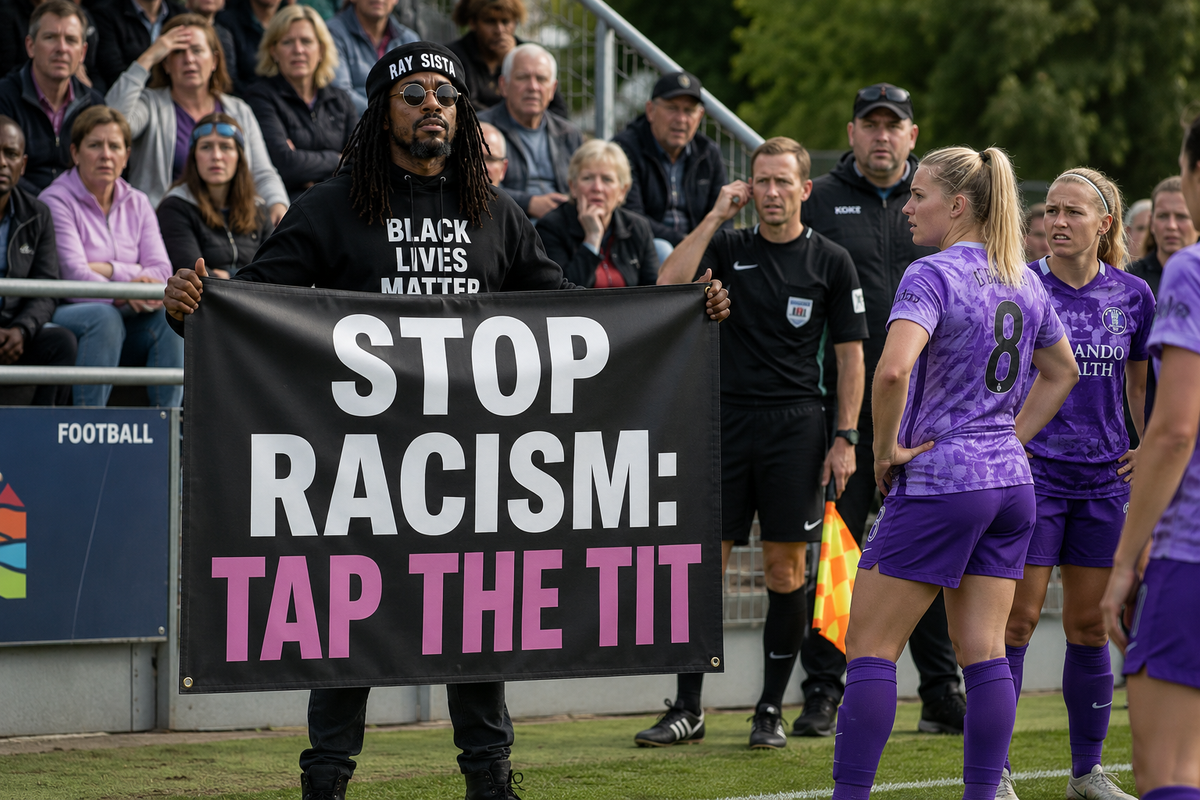
In a previous article I argued how 'tap the testicle' was the appropriate acceleration of the anti-racism campaign which commenced in 2020, and the natural successor to 'take the knee'.
To be inclusive, it is important to develop a feminist equivalent, especially given the growing success of the women's game, something I have encouraged through visiting local girls football games.
Although 'tap the testicle' is clearly a visionary idea, and more than capable of replacing 'take the knee' as the leading anti-racist gesture, there is one concern.
Just one concern, but it is a serious one.
That concern is that women are biologically incapable of participating in this gesture. This of course does not matter in the 2026 World Cup, but for this gesture to be as widely adopted as 'take the knee' then this is an obvious limitation.
The women's game eagerly adopted 'take the knee', with no one seeing any problem at all with young athletic women getting on their knees just because some blokes told them to.
However, since women do not have the appropriate genitalia, a feminist alternative to 'tap the testicle' must be developed for when the women's season starts again in August.
The obvious alternative would be to replace 'tap the testicle' with 'tap the tit'. This progressive and creative measure would allow the women's game to partake in the anti-racist gesture in a feminist and inclusive way.
It is of course essential that fans can see the gesture is actually taking place, meaning female football players will need to temporarily remove clothing for the gesture. Otherwise we could not be sure if they were genuinely applying the correct anti-racist gesture.
VAR can also be used as a verification tool.
Critics may accuse me of objectifying female athletes, but the intention is to ensure they can participate in anti-racist activism from a position of equality.
As well as ensuring that women are equally included in our DEI gestures, it will have the secondary impact of dramatically increasing male interest in the female game by making women’s football vaguely watchable.
Enjoying this post?
If you want to read more of Ray Sista, please subscribe.
Opinion

Believe all women apart from Mason Greenwood's wife
As a seventh wave post-revolutionary feminist, I live according to one overriding principle, which I will capitalise to leave the reader in no doubt about my sincerity: BELIEVE ALL WOMEN There is just one exception to this rule: Mason Greenwood's wife.

Why Big Ben should be replaced by a Massive Mohammed
As a Christian, I regard it as my duty to support the rights of religious minorities and I’m proud of my patronage of the monthly British Union of Muslim Christian Understanding Meeting's (BUMCUM).

Biden 28-You heard it here first: How Joe Biden can win in 2028
Joe Biden has never lost a Presidential election. He is the only living Democrat eligible to run for office who has never lost a Presidential election he has entered. He is also a proven Trump-slayer, winning a crushing victory against an incumbent President Trump in 2020.

Why I drive on the right as a statement against Brexit
There comes a point in every serious European’s life when symbolic gestures are no longer enough. Posting a Ukrainian flag emoji. Having 'FBPE' in your social media profile. Correcting strangers’ pronunciation of "croissant."