
Government to ban second-order consequences
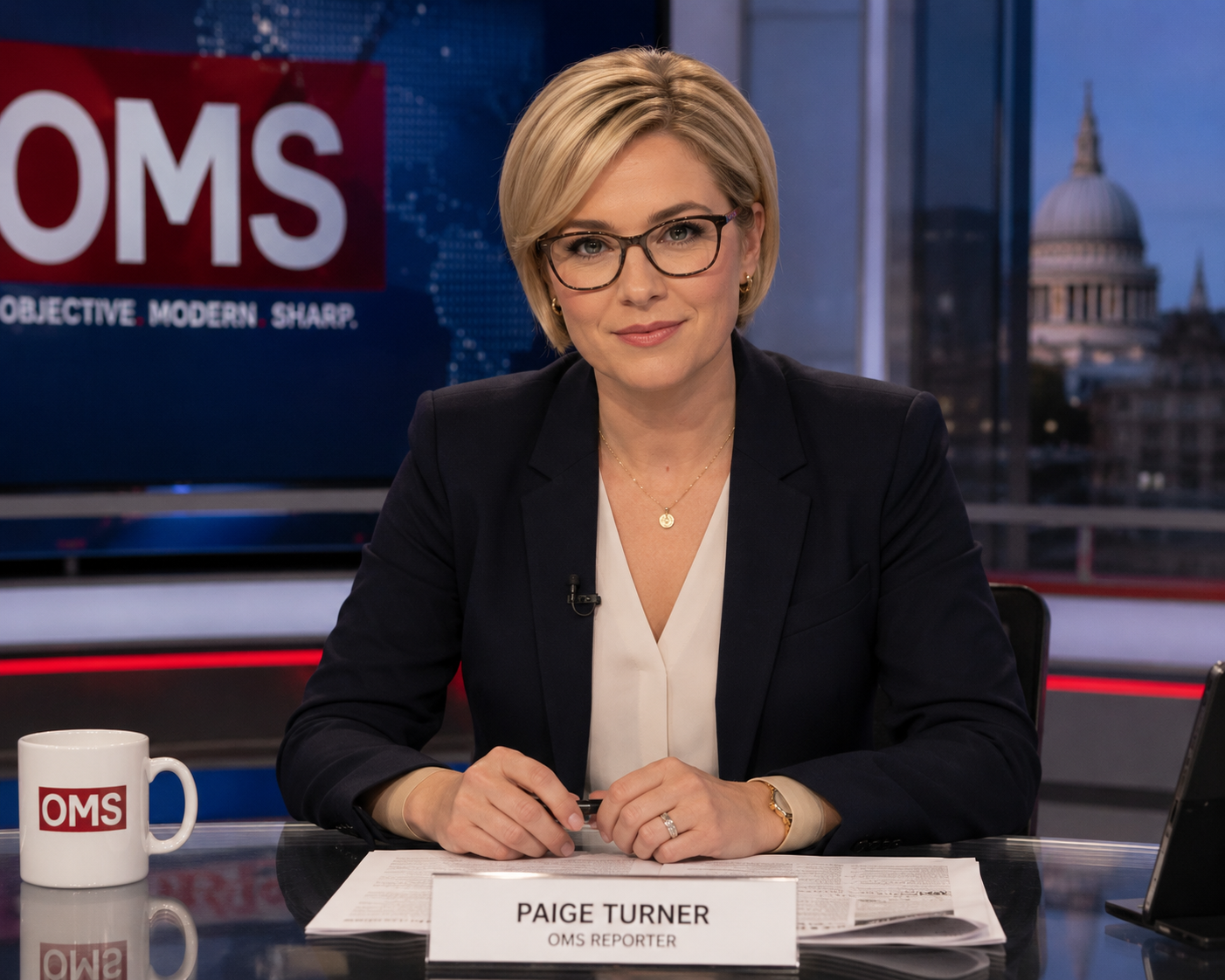
Following the local election results, and to combat the sense of drift which has engulfed the Government after less than two years in office, Ministers are planning radical legislation to ban so-called 'second-order consequences' of government policies.

Following the local election results, and to combat the sense of drift which has engulfed the Government after less than two years in office, Ministers are planning radical legislation to ban so-called 'second-order consequences' of government policies.
Under the Unintended Consequences (Prohibition) Act 2026, 'second-order consequences' are defined as 'behaviour contrary to the intentions of government policy or legislation, which were not anticipated by the government at time of introduction'.
A Treasury Special Adviser, speaking on the condition of confidentiality, told the OMS:
"During our time in government, we have witnessed first hand how our noble intentions can sometimes be undermined by individuals and companies behaving in ways which contradict the objectives of our laws and policies"
"In our first budget, we increased employer national insurance contributions in an effort to raise revenue. This succeeded, but the policy also caused firms to cut jobs which was not stated as a formal objective in the Finance Act"
Leading Labour MP Anne Tagonist, one of the principal architects of the bill, raised more ethical concerns.
“We need to reaffirm the authority of Parliament here,” she told the Commons Select Committee on the protection of democratic outcomes.
“When a law is passed, its effects should be those stated in the law itself. It is fundamentally undemocratic for non-parliamentary actors to subvert those objectives through independent thought or adaptive behaviour.”
Property Market Identified as ‘Primary Offender’
Action is expected to focus initially on the housing sector, due to the long-standing mismatch between government objectives and market outcomes.
A long-standing observer of government housing policy told of his experiences:
"Every policy we try to fix affordability rebounds on us in some way. If we boost demand by financial supporting buyers, sellers react by increasing prices. If we try to regulate rents, then landlords reduce the availability of homes on the market. The unauthorised behaviour of independent actors outside government control really reduces the effectiveness of government policy, and leads to undemocratic outcomes".
Under the new framework, landlords responding to rent controls by exiting the market will be prohibited from doing so without prior approval. A new system of Supply Reduction Prevention Orders will require property owners to continue letting homes “in alignment with policy intent.”
One anonymous Housing Department official raged to the OMS:
“If the Government caps rents to make housing more affordable, how can it be acceptable for landlords to respond by withdrawing supply?”
Similarly, the Government has become frustrated that successive demand-boosting initiatives, often rebranded iterations of earlier schemes, have had the unintended effect of increasing house prices.
"It was completely unanticipated that sellers might respond to us giving buyers more money by increasing their prices" reported a senior Treasury official.
Ministers now believe this can be addressed through new pricing guidelines to be applied through the housing market, with Ministers reserving the power to 'correct' prices deemed out of line with policy preferences.
The radical proposal has support from the influential think tank, the NEF (No Economics Frankly), which praised the government for "escaping the colonialist thought trap of 'cause and effect', which has disrupted progressive governments from the Soviet Union to Castro's Cuba."
Implementation
The legislation establishes a new unit, to be based inside the Cabinet Office, entitled Intended Consequences Enforcement (ICE). ICE will be staffed by behavioural economists, compliance officers, and what insiders describe as “several people who are very good at spotting patterns.”
The proposed powers of the ICE unit include
- Individuals adjusting their behaviour in response to policy changes may receive Fixed Penalty Notices for Adaptive Conduct
- Businesses responding to regulatory incentives in “unapproved ways” may face Corrective Alignment Orders
Ministers anticipate that so-called 'rolling legislation' will be required as more unintended consequences are identified, often arising after second-order consequences are successfully stamped out. The Government Legal Service has already started a major recruitment campaign.
Wider Applications
Ministers are understood to be considering wider applications of the policy across other government functions. The Bank of England and HM Treasury are exploring the implications of the Act for macroeconomic policy-making.
The Bank of England has found that interest rate changes have not always led to expected outcomes for the currency, and is interested in how the new Act can be used to legally enforce certain responses from foreign investors.
Meanwhile, high-net-worth individuals relocating overseas in response to tax policy could be required to seek new 'exit visas' from HM Treasury.
Experts Urge Caution
Some economists have raised concerns that the policy may misunderstand basic principles of cause and effect.
One former government adviser, Professor Verity Story, blacklisted for her opposition to the 'triple lock' pensions policy, suggested on social media that unintended consequences are an inherent feature of complex systems.
After attacks by Labour MP's, Professor Story vigorously denied any association with the rogue group of economists who achieved notoriety for claiming that increasing supply will reduce prices.
Whilst leading business organisations have officially praised the initiative, in private some business leaders have told the OMS that they are apprehensive at the bureaucratic implications of the Act. They are particularly alarmed at the requirement to share business plans on a quarterly basis with the Business Department to ensure alignment with government policy objectives.
Despite such criticism, ministers remain confident the legislation will mark a turning point.
“For too long, there has been a disconnect between the ideas expressed in parliament and the realities experienced on the streets," Anne Tagonist MP told the OMS.
“This bill reasserts a simple principle: when Parliament decides something should happen, that is what should happen.”
Enjoying this post?
If you want to read more of Paige Turner, please subscribe.
News

JK Rowling in character naming controversy
A major scandal arose last night as it emerged that someone who wrote a book decades ago contains storylines and characters which reflected the attitudes of provincial Britain at the time.
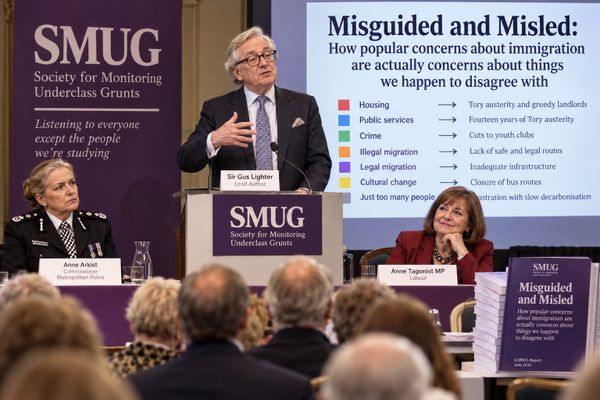
Thinktank concludes concern about immigration actually about something else
Concern about immigration is actually about something other than immigration, concludes a report issued by a prestigious liberal think-tank.

British series of superhero films to be developed
The British Film Institute (BFI) is to develop a series of British superhero films, in an initiative spearheaded by the Department for Culture, Media and Sport (DCMS).

Anti-Brexit campaigners adopt ‘Drive Right’ as new form of direct action
Anti-Brexit campaigners across Britain are adopting a controversial new form of direct action in which protesters deliberately drive on the right-hand side of the road to demonstrate their continuing commitment to Europe.