
Guest post by Matt Goodwin
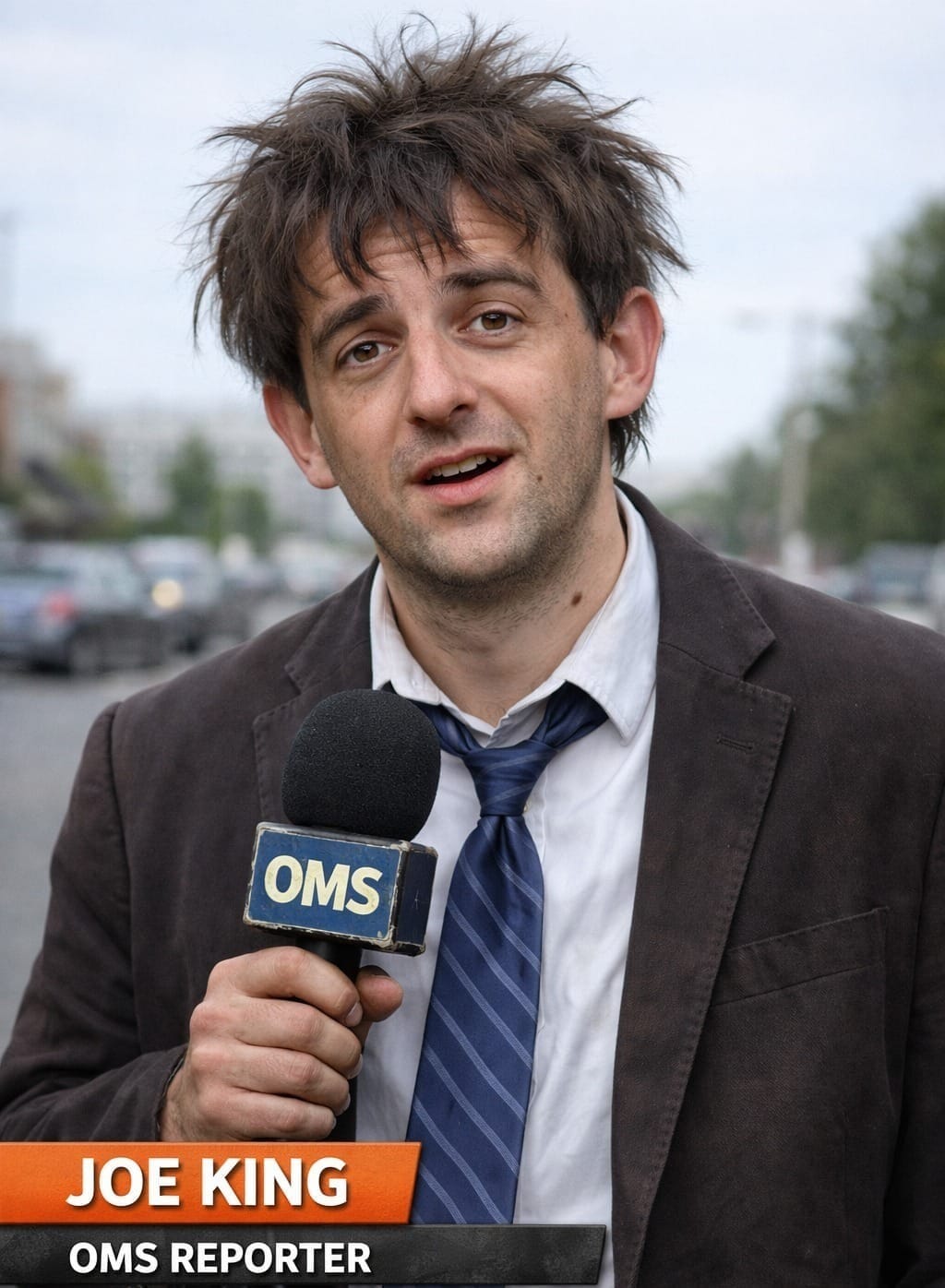
I would like to take this opportunity to categorically, unequivocally, and—if I may borrow a phrase—organically deny the absurd allegation that my latest book was written using ChatGPT or any other artificial intelligence tool.

I would like to take this opportunity to categorically, unequivocally, and—if I may borrow a phrase—organically deny the absurd allegation that my latest book was written using ChatGPT or any other artificial intelligence tool.
Let me be absolutely clear: every word in my book was produced the old-fashioned way—by me, sitting alone, thinking very hard, occasionally pausing to look out of the window in a contemplative fashion, and then typing with deliberate intellectual purpose. This is how serious scholars operate. Not via algorithms. Not via “large language models.” And certainly not via anything that requires a login and a prompt.
Some have pointed to what they call “unusual stylistic consistency,” “rapid production timelines,” and “eerily well-structured paragraphs” as supposed evidence of AI involvement. But I ask you: since when did clarity, coherence, and efficiency become suspicious? Are we now living in a society where writing too well is itself a crime?
Others have noted that certain passages in my book appear to anticipate counterarguments with remarkable speed and precision, almost as if generated by a system trained on vast datasets of human discourse. To this I say: yes. That system is called my brain.
There is also the frankly bizarre claim that some sentences in my work resemble phrases that can be found—if one looks hard enough—on the internet. I regret to inform my critics that I have, in fact, read things on the internet before. It is called research.
Let us not forget that I have spent years analysing political trends, public opinion, and the shifting dynamics of Western democracies. Is it really so difficult to believe that I might be capable of producing a 300-page manuscript without outsourcing the task to a chatbot? Must every act of intellectual labour now be attributed to silicon rather than human effort?
I suspect something deeper is at play here. We are witnessing, once again, an attempt by certain sections of the commentariat to undermine voices they find inconvenient. Unable to challenge the arguments on their merits, they instead retreat into procedural nitpicking: “Did he write it himself?” “Was there assistance?” “Was the assistance… digital?”
This is not serious debate. It is a distraction.
For the record, I did not use ChatGPT. I did not consult ChatGPT. I did not even think about using ChatGPT—except, perhaps, briefly, when someone mentioned it at a dinner party, at which point I nodded politely and changed the subject.
My book is the product of human insight, human experience, and human perseverance. If that now resembles artificial intelligence, then perhaps the real question we should be asking is not whether I used AI—but whether AI is trying to imitate me.
Thank you.
To read more such illuminating and original thoughts from the likes of Matt, please subscribe here or buy us a coffee here
Enjoying this post?
If you want to read more of Joe King, please subscribe.
Opinion

Believe all women apart from Mason Greenwood's wife
As a seventh wave post-revolutionary feminist, I live according to one overriding principle, which I will capitalise to leave the reader in no doubt about my sincerity: BELIEVE ALL WOMEN There is just one exception to this rule: Mason Greenwood's wife.

Why Big Ben should be replaced by a Massive Mohammed
As a Christian, I regard it as my duty to support the rights of religious minorities and I’m proud of my patronage of the monthly British Union of Muslim Christian Understanding Meeting's (BUMCUM).

Biden 28-You heard it here first: How Joe Biden can win in 2028
Joe Biden has never lost a Presidential election. He is the only living Democrat eligible to run for office who has never lost a Presidential election he has entered. He is also a proven Trump-slayer, winning a crushing victory against an incumbent President Trump in 2020.
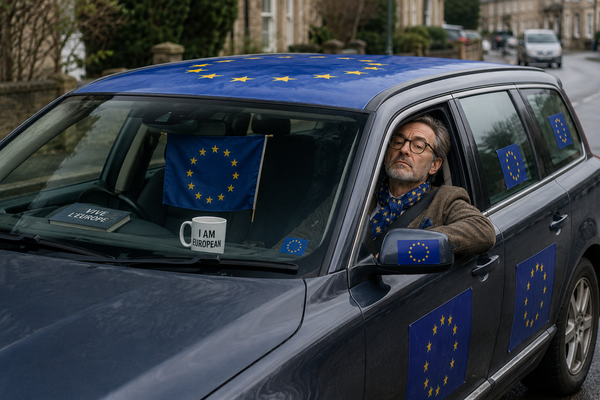
Why I drive on the right as a statement against Brexit
There comes a point in every serious European’s life when symbolic gestures are no longer enough. Posting a Ukrainian flag emoji. Having 'FBPE' in your social media profile. Correcting strangers’ pronunciation of "croissant."